By prinasieku

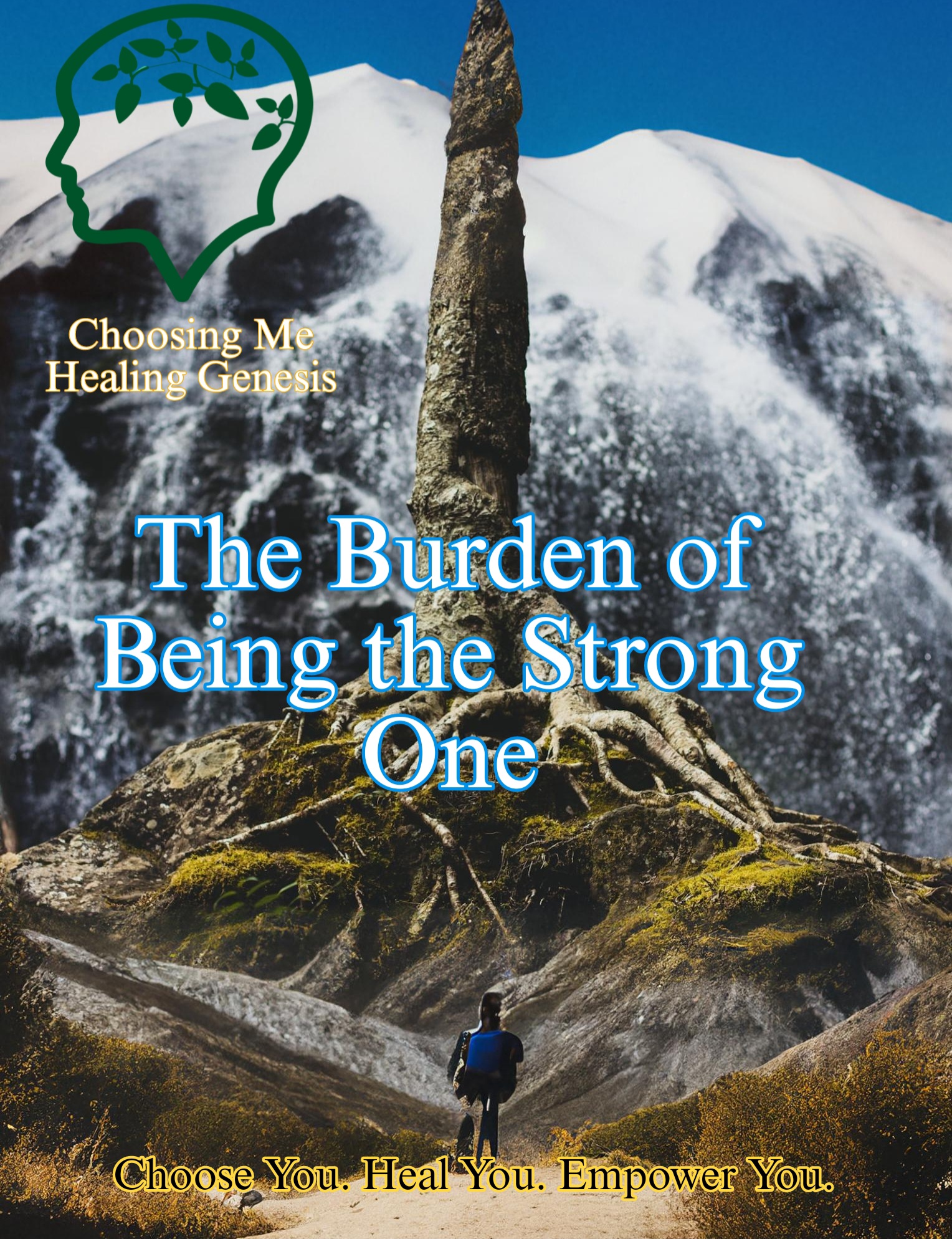
The Burden of Being the Strong One

People admire the strong one. They lean on them, seek their wisdom, and trust them to hold everything together. But no one ever asks who the strong one turns to when they are the ones unraveling.

The strong one is the person who never falls apart in front of others. They give without expecting much in return. They listen, advise, and show up—even when they’re exhausted. They are the ‘safe place’ for everyone else. But here’s what people don’t see: being strong is heavy.

It’s the weight of always having to be okay, even when you’re not. The pressure to never crumble, because if you do, who will pick up the pieces? It’s realizing that people check on you less, not because they don’t care, but because they assume you’re fine. It’s the loneliness of being everyone’s person, but never quite having your own.

And yet, the hardest part? Strength becomes an identity. You don’t just act strong; you are strong. And once people believe that, it’s difficult to be anything else. Admitting you’re struggling feels like disappointing those who count on you. Saying “I need help” feels foreign. The thought of burdening others makes you swallow the lump in your throat and carry on.

But here’s the truth: strength isn’t about never breaking. It’s about knowing when to rest. It’s about recognizing that even the strong need support. That it’s okay to be vulnerable, to be held, to say, “I can’t do this alone.”

So to the strong one reading this—who’s tired but won’t say it, who’s hurting but keeps smiling, who feels unseen despite always being there for others—this is for you. You are allowed to lean. You are allowed to ask. You are allowed to be more than just ‘strong.’

Because real strength? It’s knowing that you don’t have to carry everything alone.


By prinasieku

The Fear of Not Knowing

There’s a strange kind of panic that rises when you realize you don’t know something you should know.

You’re in a conversation, and someone says something unfamiliar. Your mind races. Do I ask? Do I nod? You choose the nod, hoping they don’t notice the confusion flashing in your eyes.

You’re in a new place, but instead of admitting you’re lost, you walk like you have a destination. Like you belong. Because stopping to ask feels like admitting you don’t.

You’re in a meeting, and a term gets thrown around. Everyone seems to understand. You don’t. But you keep quiet because asking would mean exposing the gap.

It’s terrifying, isn’t it?

Not because not knowing is bad. But because of what we think it means.

That we’re behind.

That we should have known.

That we’re not smart enough, experienced enough, prepared enough.

And so, we perform.

We pretend we understand. We play along. We force confidence, hoping no one notices the cracks. Because somewhere along the way, we learned that knowing is safety. That uncertainty is dangerous. That appearing clueless is worse than actually being clueless.

But do you know what happens when we do this long enough?

We lose something.

We lose the chance to learn, because we stop asking.

We lose the chance to grow, because we pretend we already have.

We lose the chance to be seen for who we actually are—curious, evolving, human.

And maybe that’s the real tragedy. Not that we don’t know everything, but that we are too afraid to admit it.

So what if we didn’t let fear decide for us?

What if we let go of the pressure to always have the answer? What if we allowed ourselves to ask, to not know, to learn without shame?

Because maybe real confidence isn’t in pretending.

Maybe it’s in knowing we don’t have to.

By prinasieku

Stuck in the Loop

You tell yourself, tomorrow will be different.

You mean it, too. You’ve thought it through. Mapped it out in your head. The things you need to do. The things you want to do. You can see yourself doing them. You know exactly how it should go.

But then tomorrow comes, and somehow—without you even noticing—you’re back in the rhythm you know. The same habits, the same routines. The things you planned to add? They sit there, untouched, like unopened messages in a chat you’ll “reply to later.”

And you hate it.

You feel lazy, unmotivated. Why am I like this? you ask yourself.

But here’s the thing: it’s not about laziness. It’s not even really about procrastination.

It’s muscle memory.

Your brain, your body, they know a pattern. They’re wired for it. And breaking that pattern? It’s like trying to write with your other hand—it feels wrong, slow, uncomfortable. Not because you don’t want to change. Not because you’re incapable. But because your system—your very being—is used to running on autopilot.

And autopilot is strong.

It’s why you find yourself scrolling instead of starting. Thinking instead of acting. Postponing instead of pushing through. And every time you don’t follow through, the guilt piles up, making it even harder to try again.

So what now?

Most people will tell you: Just do it. Be disciplined. Push through.

But if it were that simple, you wouldn’t be here, reading this.

The truth?

You don’t break the cycle by declaring war on it. You don’t strong-arm your way out of a deeply ingrained routine. You sneak your way out.

Tiny, almost unnoticeable shifts. A minute here. A small action there. Not trying to change everything overnight, but slipping new things into the cracks of the old.

Instead of “I’ll wake up and change my whole routine,” try “I’ll add one small thing, just one.”

Instead of “I’ll work for hours,” try “I’ll start with five minutes.”

Instead of waiting to feel ready, just begin, even if it’s ugly and slow and not enough.

Because the truth is, once the cycle breaks—even just a little—it’s never the same again.

And neither are you.

By prinasieku

The Price of a Mistake

It happens in a split second. A rushed decision. A wrong assumption. A word spoken too soon. And just like that, something slips—control, a chance, a number that can’t be taken back.

At first, it feels small. Just a little misstep. A moment of miscalculation. But then, realization hits. And suddenly, the weight of it is unbearable.

Why did I say that?

Why didn’t I pause?

Why didn’t I think it through?

The regret is instant, sharp. The kind that sits heavy in the chest, replaying itself in an endless loop. And the worst part? There’s no undo button. No rewind. No way to fix what’s already set in motion.

Maybe it’s money lost.

Maybe it’s an opportunity that slipped away.

Maybe it’s a moment that could have gone differently, if only.

If only.

The mind spirals. The heart sinks. And the voice inside isn’t kind. You should’ve known better. You should’ve done better.

But what if—just what if—this isn’t a failure?

What if mistakes aren’t just about what they take from us, but about what they teach us?

What if this is refining, not ruining?

What if the real price of a mistake isn’t the loss, but the lesson?

Because next time, there will be a pause. A moment to think. A chance to do differently. And next time, the wisdom gained from this will make all the difference.

Maybe the mistake wasn’t the end of the story. Maybe it was the sharpening of something deeper, stronger.

And maybe, just maybe—what feels like a loss today will turn out to be one of the best things that ever happened.

By prinasieku

Doing It Anyway

There are moments when the weight of everything feels unbearable. When every fiber of your being screams to stop, to sit it out, to let someone else handle it. When fear, exhaustion, or doubt whispers in your ear, “Why bother?” But then, something inside you whispers back, “Do it anyway.”

Not because it’s easy, not because you’re unshaken, but because deep down, you know: showing up matters.

It matters on the days when your heart feels hollow, and you’re putting on a brave face for the people counting on you. It matters when you’re terrified of failing but you step forward anyway, because staying still is no longer an option.

Doing it anyway doesn’t mean the fear disappears. It doesn’t mean you’re always strong. It just means you’ve decided that what’s on the other side of this moment is worth fighting for.

It’s the parent who tucks their child into bed with a smile, even though their own world is falling apart. It’s the dreamer who sends out that job application or writes that first chapter, even when rejection feels inevitable. It’s the person who chooses love again, after heartbreak has tried to convince them it’s safer to never try.

Sometimes, doing it anyway is about defying that little voice that says you’re not enough. It’s about standing in the middle of the storm, drenched and shivering, and saying, “I’m still here.”

And let’s be real—there are no guarantees. You might fall flat on your face. You might not get the outcome you hoped for. But the magic of doing it anyway isn’t in the result; it’s in the courage it takes to try. It’s in the quiet realization that you are so much stronger than you think.

So, to the one reading this who feels like giving up—this is for you. You’re allowed to be scared. You’re allowed to feel tired. But don’t let those feelings dictate your next move. Keep going. Do it scared. Do it tired. Do it messy.

Because one day, when you look back, you’ll realize that these moments—the ones where you did it anyway—were the ones that shaped you. The ones that proved you’re not just surviving; you’re showing up for life in ways that most people never will.

And that, my friend, is extraordinary.

By prinasieku

When the Battle is in Your Mind

Have you ever found yourself locked in a battle within your own mind? A thought or habit you desperately want to escape, yet it clings to you, demanding attention, overpowering your willpower.

It feels like a cycle you can’t break. You know what’s right. You want to choose better. But your mind seems to have a mind of its own, pulling you into a struggle you didn’t ask for.

And when you stumble, guilt takes over. It whispers that you’ve messed up, that you’re unworthy of the good things ahead. You wonder if you’ve delayed your own progress, sabotaged the very blessings you’ve been working toward.

But let me tell you this: you’re not defined by the battles you face.

Even when it feels like the struggle has the upper hand, there’s a way forward. Here are a few thoughts to hold onto when you feel trapped:

1. Recognize the Trigger

Every struggle has a starting point. Pause and ask yourself: What’s triggering me right now? Is it stress, fear, loneliness? Once you name it, you take away some of its power.

2. Pause Before You React

That thought or urge wants you to act on impulse, but you don’t have to. When it rises, pause. Take a deep breath. Step away. Engage in something that redirects your mind—a walk, a creative outlet, or a conversation with someone you trust.

3. Speak Kindness Over Yourself

Guilt thrives on self-criticism, but you don’t have to listen to that voice. Remind yourself that one misstep doesn’t define your journey. You’re a work in progress, and progress isn’t linear.

4. Don’t Walk Alone 

Struggles grow in silence, but they shrink in community. Find someone you can talk to—a friend, a mentor, therapist, or a group where you feel safe. Sharing your journey can bring healing and perspective.

5. Win Today

Don’t think about the entire battle—just focus on today. If you stumble, don’t stay down. Get back up, and take one small step forward.

Breaking the cycle takes time. It takes patience and grace, especially with yourself. The fact that you’re even reading this, that you care about growth and change, shows your strength.

You haven’t ruined your future. You’re not unworthy of good things. You’re human, and that means you’re still becoming.

This new year, let’s commit to taking it one day at a time, one choice at a time. Let’s choose to believe in the possibility of change, even when it feels slow. You’re stronger than you think, and the best version of yourself is still waiting to be discovered.